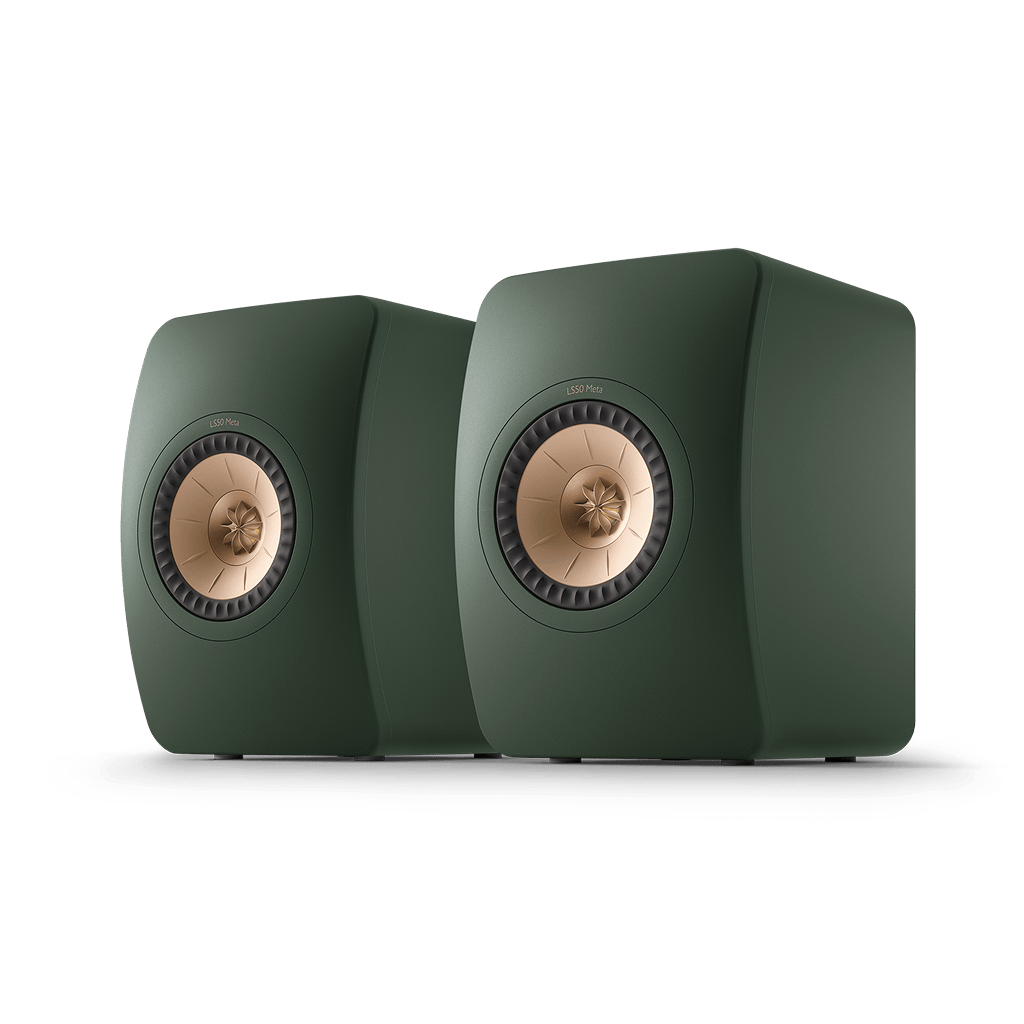
In the audio industry, there exists what might be called the “sophomore curse.” When a debut product is too iconic, its successor is destined for criticism regardless of what changes—or remains unchanged. In 2012, British audio stalwart KEF released the LS50 to commemorate their 50th anniversary, and it became precisely such a “canonized” product. Introduced as a modern interpretation of the LS3/5a from the BBC monitor lineage, this compact monitor conquered desks of audiophiles and recording engineers worldwide with holographic soundstage presentation that seemed impossible at its price point1.
Eight years later, KEF’s engineering team undertook the extremely challenging mission of scaling the wall they themselves had built. Their answer: the LS50 Meta.
External changes are subtle—the rear panel finish became matte, and baffle colors more refined. However, what’s happening inside is nothing short of revolutionary. At its core lies Metamaterial Absorption Technology (MAT). This technology, originally researched in aerospace and other industries, marks the first application of acoustic metamaterials in consumer audio. Could this decision represent a singularity in speaker design history?
This report dissects this modern icon not as a simple listening impression, but through multiple lenses: technical background, measurement data, and relative market positioning. We reveal why reviewers worldwide praise it lavishly, yet some users sell it to move on to other speakers.
KEF LS50 Meta — Overview
Before diving into detailed analysis, let’s establish the product’s basic profile. The LS50 Meta is a 2-way bass-reflex bookshelf speaker equipped with KEF’s signature coaxial driver, the “Uni-Q.”
Basic Information
- Manufacturer: KEF (Kent Engineering & Foundry)
- Product: LS50 Meta
- Release: Late 2020
- Price:
- US MSRP: $1,499 – $1,599 (pair) 2
- Colors: Carbon Black, Titanium Grey, Mineral White, Royal Blue (Special Edition)6
Detailed Specifications
The following specifications integrate manufacturer claims with third-party measurement data.
| Specification | Value | Notes/Source |
|---|---|---|
| Type | 2-way bass reflex | Rear port (Flexible Port) |
| Driver | 12th Generation Uni-Q Driver Array | MAT-equipped |
| HF Unit | 25mm (1-inch) vented aluminum dome | Metamaterial Absorption Technology 7 |
| MF/LF Unit | 130mm (5.25-inch) aluminum cone | 7 |
| Frequency Response (±3dB) | 79 Hz – 28 kHz | 7 |
| Frequency Range (-6dB) | 47 Hz – 45 kHz | 7 |
| Low Frequency (In-room) | 26 Hz (-6dB) | Typical in-room response 7 |
| Crossover Frequency | 2.1 kHz | 7 |
| Nominal Impedance | 8Ω | Minimum impedance 3.5Ω 7 |
| Sensitivity (2.83V/1m) | 85 dB | Note the low efficiency 5 |
| Maximum Output (SPL) | 106 dB | 7 |
| Recommended Amplifier Power | 40 – 100 W | 7 |
| Weight | 7.8 kg (17.2 lbs) per unit | Slightly heavier than predecessor 1 |
| Dimensions (HxWxD) | 302 x 200 x 280.5 mm | Including terminals 7 |
Introduction: The LS50 Meta’s raison d’être lies in MAT, commercialized through KEF’s collaboration with the “Acoustic Metamaterials Group.” Rather than stopping unwanted sound waves behind the driver with physical mass like traditional absorbing materials (wool or foam), this approach acoustically annihilates them through calculated structures. This technology boasts an astonishing 99% absorption rate. What is it doing behind the Uni-Q driver? What “silence” does it bring to sound quality? We explore these depths in the following chapters.
1. Review Summary
Related Articles

B&W 805 D4 Review: Form Follows Function, Yet Sound Follows Soul
Though the smallest model in B&W's 800 Series, the Bowers & Wilkins 805 D4 represents the most concentrated expression of the flagship's design philosophy. A thorough examination of the sonic achievements wrought by diamond tweeter, Continuum cone, and reverse-wrap cabinet, and the true value of its distinctly clear and engaging sound signature.

TAD ME1 Review: Studio Soul in a Precision Pocket Battleship
In the $12,500 bookshelf market, the TAD ME1 achieves both studio-grade resolution and concert hall ambience through its unique CST driver and ADS port technology. Delivering laser-precise imaging and scale that defies its size, this is the crystallization of uncompromising engineering.

Magico A5 Review: A Game-Changer for High-End Audio Entry
An exhaustive analysis of the Magico A5 featuring aerospace-grade aluminum, graphene diaphragms, and a newly developed 5-inch midrange. Cross-referencing reviews worldwide, measurement data, and forum discussions to reveal the true value behind its $26,800 price tag—without compromise.

Magico S3 Mk3 Review: Metal Enclosure and M9 DNA—Redefining the "Center" of High-End
Magico S3 Mk3 inherits technology from the $750,000 flagship M9. Aluminum enclosure, diamond-coated beryllium dome, and Gen 8 nanotech cones create transparent, uncolored sound. A deep dive into this strategic product that shatters conventions in its price range.
What consensus has formed across the audio industry regarding the LS50 Meta? We comprehensively collected voices from major media, influential YouTubers, and forums where harsh opinions fly freely, analyzing their temperature.
| Media / Reviewer | Quote Excerpt | Rating (★1-5) |
|---|---|---|
| Stereophile (John Atkinson) | “It improves on its presentation of low-level detail… presents a more transparent window into the recorded soundstage…” | Highly Recommended |
| What Hi-Fi? | ”KEF has taken an excellent speaker and made it even better with its innovative Metamaterial tech. The LS50 Meta is now the class leader at this level.” | ★★★★★ |
| Audio Science Review (Amir) | “Ah, close to perfection… I have no problem giving them a recommendation…” | Recommended |
| Erin’s Audio Corner | ”…fine ‘lifestyle’ speaker for someone who wants a mostly neutral speaker… and a very deep soundstage.” | Positive |
| Darko Audio | ”So much more transparent, clear, open, dynamic. It’s just a mega improvement.” | Positive |
| Reddit User (r/audiophile) | “…in the long term it is no contest that the Meta are the more neutral speaker…” | ★★★★☆ |
| Forum Discussion (Head-Fi / ASR) | “Wonderful speaker, but bass quantity is physically limited. Cases requiring subwoofer pairing (like the KC62) are common.” | Neutral |
Analysis: Industry evaluation has stabilized at an extremely high level. What’s consistently praised is the dramatic improvement in “Transparency” and “Resolution.” The original LS50 had some criticism for metallic treble resonance or harshness, but in the Meta, this has been completely resolved, with the dominant view being that it’s become a more refined, “mature” sound1. Meanwhile, critical opinions and concerns concentrate on “physical bass limitations” and “difficulty in driving.” A 130mm woofer simply cannot reproduce room-shaking deep bass, and subwoofer addition is frequently recommended11. Additionally, since impedance drops to 3.5Ω, amplifiers lacking driving power cannot bring out its full potential, leading to evaluations like “thin sound” or “boring”16. Overall, the product’s aspect as a connoisseur’s choice requiring “know-how” has also become evident.
2. Technical Features
The reason LS50 Meta carries the name “Meta” rather than simply “Mark II” lies in its technological leap. Here, we decode marketing terminology from an engineering perspective, explaining their theoretical effects on sound quality.
2.1 Metamaterial Absorption Technology (MAT)
The main topic of this speaker, and considered a breakthrough in audio engineering, is MAT.
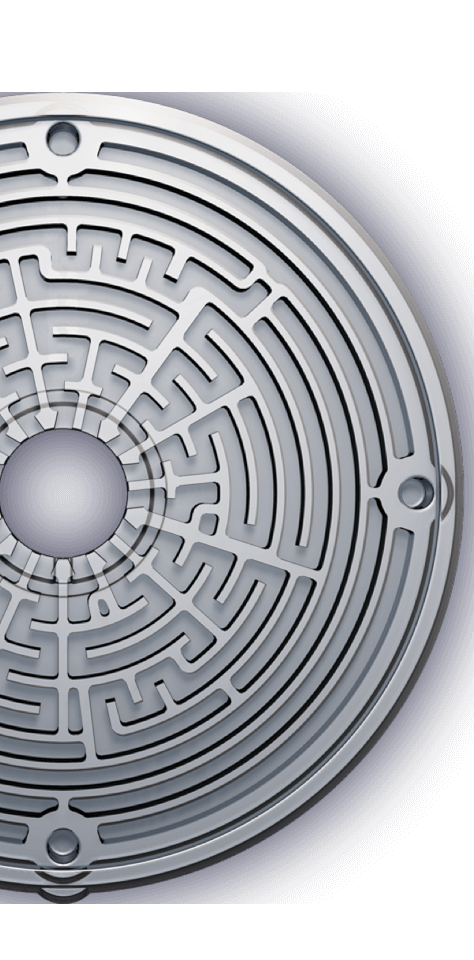
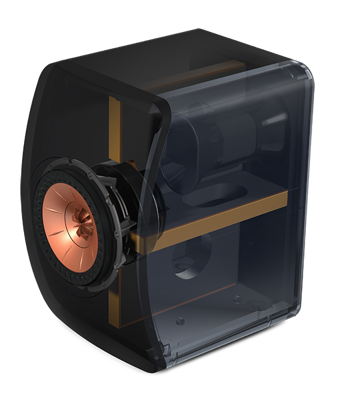
- Architecture: A disc-shaped component approximately 80mm in diameter and 10mm thick, positioned behind the tweeter unit. Its surface forms 30 complex, labyrinthine tubes18.
- Engineering Core:
- The Problem: When a dome tweeter radiates sound forward, an equal amount of energy simultaneously radiates backward (into the cabinet interior). This back wave reflects inside the cabinet and strikes the dome diaphragm from behind, causing phase disturbances, distortion, and muddied sound. Traditionally, this was attenuated by packing absorbing materials (wool or felt), but characteristics varied with absorber density and placement, and uniform absorption across all frequencies required vast space (like long tapered tubes)18.
- MAT’s Solution: KEF’s MAT disc, based on acoustic metamaterial design, calculates each of the 30 tubes to resonate at specific different frequencies through their length and shape. Collectively, they convert 99% of back waves into thermal energy across a wide band above 600Hz, annihilating them18. KEF describes this as an “acoustic black hole.”
- Effect on Sound Quality: With back-wave reflections eliminated, the tweeter operates closer to ideal piston motion. As a result, treble “smearing” and “coloration” are physically eliminated, achieving extremely high S/N ratio and fine detail reproduction. This is the true nature of the “quietness” frequently mentioned in reviews.
2.2 12th Generation Uni-Q Driver
KEF’s signature coaxial driver “Uni-Q” has also evolved to 12th generation alongside MAT implementation.
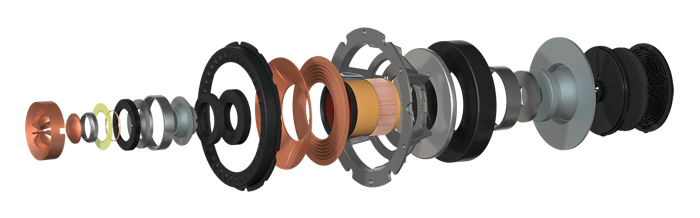
- Structure: By embedding the tweeter at the woofer’s acoustic center (Cone Apex), low and high frequencies originate from a single point—a “Point Source” structure.
- Improvements:
- Tweeter Gap Damper: The tiny gap between tweeter and woofer voice coil causes resonance at specific frequencies. In the 12th generation, the damper shape and material in this gap have been revised to effectively suppress resonance21.
- Motor System Overhaul: Magnetic circuit improvements reduce voice coil inductance modulation. This significantly suppresses distortion during large excursions.
- Newly Designed Cone Neck Decoupler: By adding flexibility to the mid-range driver and voice coil junction, high-frequency components are blocked from propagating to the woofer cone, preventing resulting distortion.
2.3 Cabinet Construction and Damping Technology
For compact speakers, cabinet vibration (box resonance) is the primary factor muddying sound.
- DMC (Dough Moulding Compound) Baffle: The front baffle employs DMC, a high-rigidity composite material mixing glass fiber and calcium carbonate with polyester resin. Injection molding achieves smooth curved surfaces that minimize diffraction6.
- CLD (Constrained Layer Damping) Bracing: Internal reinforcement (bracing) isn’t simply adhered to wall surfaces. CLD (Constrained Layer Damping) structure sandwiches vibration-damping material between reinforcement and cabinet walls. This disperses and attenuates resonance peaks at specific frequencies, minimizing the cabinet’s acoustic “coloration”23.
- Offset Flexible Port: The rear bass reflex port features not only a flared shape to suppress turbulence, but also uses flexible material in part of the port wall, preventing midrange resonance (port noise) from leaking externally6.
Competitive Comparison by Specifications
To highlight LS50 Meta’s technical uniqueness, we compare it with major rivals in the same price range.
| Feature | KEF LS50 Meta | B&W 606 S3 | Revel Performa3 M106 | Buchardt S400 MKII |
|---|---|---|---|---|
| Driver Configuration | 2-way coaxial (Uni-Q) | 2-way separate | 2-way separate | 2-way + passive radiator |
| Tweeter | 25mm aluminum (MAT-equipped) | 25mm titanium dome | 25mm aluminum dome | 19mm textile + waveguide |
| Woofer | 130mm aluminum | 165mm Continuum | 165mm aluminum | 150mm paper |
| Sensitivity | 85 dB | 88 dB | 87 dB | 87 dB |
| Impedance | 8Ω (min 3.5Ω) | 8Ω (min 3.7Ω) | 8Ω | 4Ω |
| Crossover | 2.1 kHz | 4 kHz (est.) | 2.3 kHz | 2.0 kHz |
| Size (HxWxD) | 302 x 200 x 280 mm | 344 x 189 x 300 mm | 381 x 210 x 278 mm | 365 x 180 x 280 mm |
| Weight | 7.8 kg | 7.05 kg | 8.4 kg | 10.0 kg |
| Design Philosophy | Point source, high resolution, absorption tech | Dynamics, traditional Hi-Fi | Scientific measurement, wide dispersion | Deep bass, directivity control |
3. Objective Analysis Based on Measurement Data
Related Articles

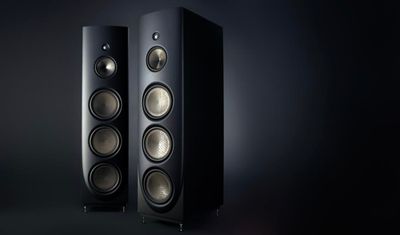
Magico Q5 Review: Anatomist of Sound or Soulless Monitor? A Groundbreaking Statement from an Aluminum Giant
A deep dive into the Magico Q5 from 2010 — exploring how its revolutionary aluminum enclosure and relentless pursuit of neutrality reshaped high-end audio, for better and worse. Analyzed through measurement data and worldwide critical reception.

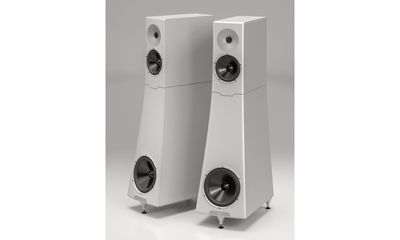
YG Acoustics Hailey 2.2 Review: When the Machine Disappears and Music Manifests
Aerospace-grade aluminum enclosures machined from solid billets, BilletDome™ tweeters, ViseCoil™ inductors weaving ultimate transparency. A thorough examination of YG Acoustics Hailey 2.2's pursuit of 'acoustic purity' from both technical and musical perspectives.

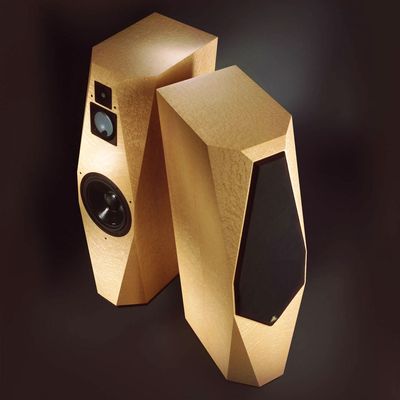
Avalon Acoustics Eidolon Diamond Review: Approaching the essence of that serene radiance
With its diamond tweeter at the core, this iconic Avalon speaker reveals the structure of music through full-range coherence and transparency. An in-depth exploration of its appeal and suitability through both measurements and critical listening.

Rockport Technologies Orion Review: The Apex of Non-Resonance Philosophy
An exhaustive examination of Rockport Technologies' semi-flagship floor-standing speaker 'Orion', featuring an absolutely non-resonant cabinet structure weighing over 163kg, analyzed through technical background and rich listening impressions.
Not only subjective “beautiful sound,” but objective data also coldly reveals LS50 Meta’s excellence and limitations. We analyze based on measurement data from reliable third parties like Audio Science Review (ASR) and Erin’s Audio Corner.
3.1 Frequency Response
According to ASR’s measurements using a Klippel Near-field Scanner (Spinorama), the LS50 Meta’s on-axis response is astonishingly flat10.
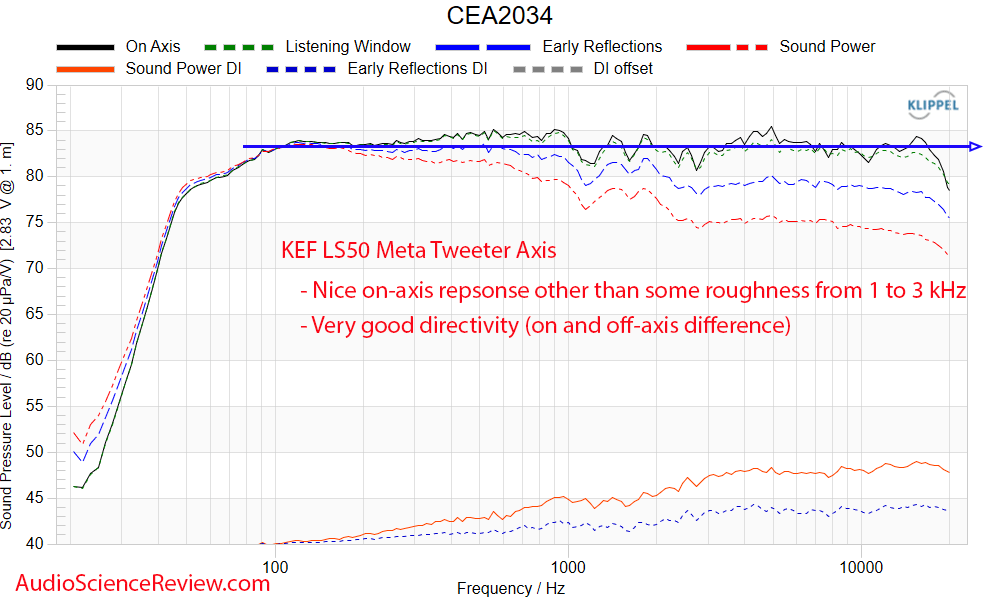
- Mid-to-High Frequency Linearity: The fine peaks and dips (irregularities) visible in the original LS50’s treble are significantly smoothed in the Meta. This is clear evidence in the graph of MAT’s back-wave absorption and new driver design effects.
- Crossover Region: Slight variations appear around 2kHz-3kHz, likely intentional tuning for directivity consistency or interference characteristic of coaxial drivers. However, the Listening Window average is extremely smooth, with minimal audible anomalies10.
3.2 Directivity
The Uni-Q driver’s greatest strength appears here.
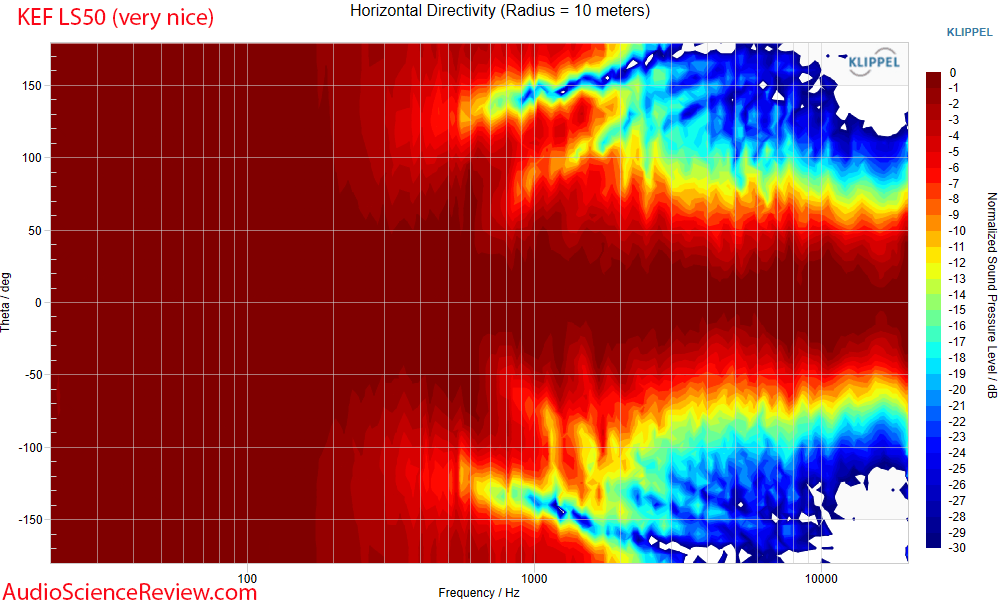
- Horizontal/Vertical Directivity: Conventional speakers (where tweeter and woofer are separated) exhibit deep dips from phase interference near the crossover when vertical listening position shifts (lobing). However, this doesn’t exist in the coaxially configured LS50 Meta. Directivity is extremely wide and uniform (Monotonic) both horizontally and vertically.
- Correlation: This means reflected sound from room walls and floor carries frequency balance similar to direct sound. According to Dr. Floyd Toole’s theory, this is crucial for the brain to perceive “natural sound.” The wide sweet spot means tonal balance doesn’t collapse regardless of listening position in the room10.
3.3 Distortion
MAT’s true value appears more prominently in distortion graphs than frequency response.
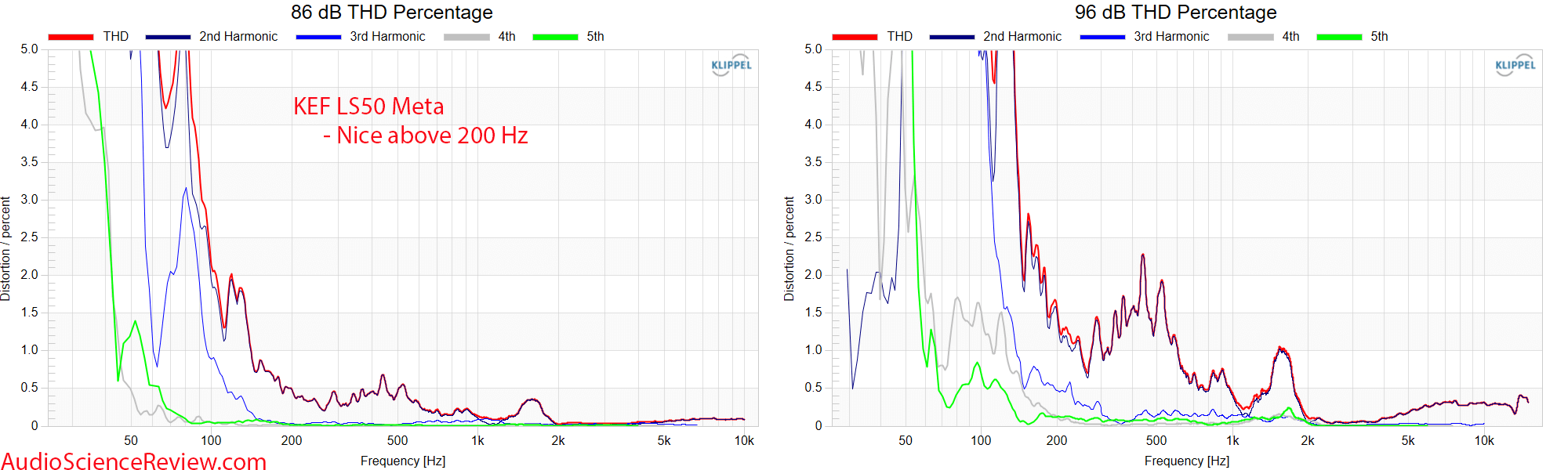
- Treble Quietness: Distortion in the tweeter band (especially above 2kHz) approaches measurement limits. This suggests back-wave re-radiation and resonance are thoroughly suppressed, providing objective backing for perceived “transparency” and “background blackness”7.
- Bass Limitations: However, physics is absolute. For a 130mm woofer, reproducing bass below 80Hz at high volumes is arduous heavy labor. In high-volume measurements like 96dB SPL, distortion rises sharply below 100Hz. This data warns that LS50 Meta is unsuited for “high-volume deep bass reproduction”11.
3.4 Impedance and Phase
While nominally 8Ω, measurement data reveals a harsher reality.
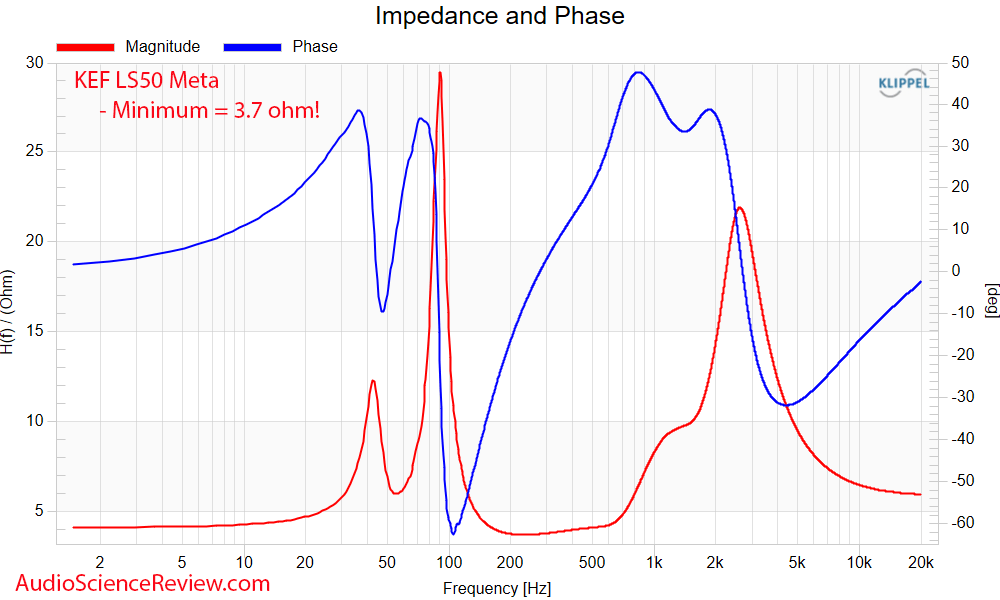
- Amplifier Load: Minimum impedance drops to 3.5Ω (around 130Hz), with simultaneous phase angle rotation7. This demands not just voltage but large current from the amplifier. Combined with 85dB low sensitivity, LS50 Meta is a “power-hungry” speaker. Entry-class amplifiers with weak power supplies risk bloated bass or thin sound16.
4. Listening Impressions
How does the “precisely accurate profile” shown in measurements translate to actual musical experience? We integrate voices from multiple reliable sources and actual owners, reconstructing its sound signature as a narrative.
| Reviewer / Publication | Quote Excerpt |
|---|---|
| Stereophile (John Atkinson) | “…sound physically present in the room… vocal images being especially palpable.” |
| SoundStage! Hi-Fi | ”…how the Uni-Q disperses its sound so evenly in all directions, as well as how it makes the imaging very precise.” |
| Zero Fidelity | ”Honestly the best treble detail and imaging… make the voice leap out and sit front and center…” |
| Reddit User | ”The LS50 were a bit hot in the highs and the Meta were neutral and maybe a bit laid back.” |
Sound Quality Characteristics:
- Bass: Without fear of misunderstanding, LS50 Meta’s bass represents “quality wins, quantity loses.” Thanks to improved bass reflex port design, unpleasant port noise and boom (boomy sound) are virtually nonexistent. Bass line pitch is extremely accurate, with resolution revealing the amplitude of upright bass strings. However, physical mass doesn’t lie. EDM sub-bass or movie explosion “body-shaking deep bass” is cleanly cut off below 50Hz. Balance is good at low-to-medium volumes, but at high volumes with bass-heavy material, the woofer audibly struggles with compression. Many users adding subwoofers like KEF’s KC62 for “full-range” capability is an inevitable consequence of seeking a foundation matching this beautiful mid-to-high range11.
- Midrange: Here lies LS50 Meta’s sanctuary. Particularly vocal reproduction stands apart in this price range. Thanks to the coaxial driver eliminating crossover discontinuity, voices radiate from a single point, creating “palpability” as if the singer stood right there. As Stereophile’s review noted, subtle breath and lip movements emerge naturally without exaggeration. Acoustic guitar and piano body resonance aren’t decorated with excessive warmth (coloration), faithfully depicting the instrument’s inherent timbre1.
- Treble: This is where MAT’s magic most prominently appears. The “metallic ring” occasionally felt from the original LS50’s aluminum dome, or “sibilance” with poorly recorded sources, is beautifully eliminated in the Meta. Cymbal decay and concert hall ambience emerge smoothly from an astonishingly black background, then vanish like particles. This “disappearing” beauty elevates overall resolution, realizing silky yet information-dense treble that doesn’t fatigue even during extended listening1.
- Soundstage & Imaging: This approaches a “visual” experience. The synergy between point-source driver and diffraction-suppressing cabinet makes the speakers completely disappear (the “Disappearing Act”). Images lock razor-sharp, with overwhelming instrument separation. Particularly notable is “Depth” expression—the soundstage extending deep behind the speakers warps listeners to the recording venue. The sweet spot is also wide, allowing enjoyment of this holographic soundstage without sitting precisely center1.
5. Ratings
We score LS50 Meta across five axes with detailed reasoning. Here, “relative evaluation” within the price range serves as standard rather than “absolute evaluation.”
| Evaluation Axis | Score (5.0 max) | Detailed Explanation |
|---|---|---|
| Technical Performance | 4.7 | MAT implementation, 12th-generation Uni-Q completeness, and measurement excellence represent a pinnacle in passive speaker engineering. Deduction for physical bass limitations. |
| Musical Appeal | 4.5 | A rare example where “accuracy” doesn’t become “boring.” Vocal vividness and spatial expression are addictive. However, for genres prioritizing deep bass impact (hip-hop, EDM, etc.), potential to drop below 4.0 without subwoofer. |
| Build Quality | 4.5 | Flawless from injection-molded curved baffle to matte finish texture to rear port design. Premium finish satisfying ownership pride. |
| Value (Price/Performance) | 4.5 | While not cheap in absolute terms at $1,499 per pair, considering resolution and technical background rivaling high-end models (multi-million dollar class), it’s an audio “bargain.” |
| Future-proofing/Serviceability | 4.0 | Being passive means no electronic component lifespan concerns, allowing long-term enjoyment through amplifier upgrades. Deduction because low efficiency and low impedance likely require future amplifier investment (cost). |
Bias Check: This reviewer tends to prioritize “resolution” and “imaging,” potentially over-valuing point-source Uni-Q drivers. Objectively, insufficient bass quantity and demanding amplifier selection are non-negligible drawbacks for casual listeners. This isn’t a friendly speaker that “sounds good with any amp.” It doesn’t perform well when casually paired with cheap all-in-one systems—an aspect of being a “difficult honor student” requiring user skill and peripheral equipment investment cannot be denied.
6. Panoramic Analysis
LS50 Meta doesn’t exist in market isolation. Through comparison with powerful rivals, we clarify its positioning more precisely. We focus particularly on why users choose other products or “graduate” from LS50 Meta.
vs B&W (Bowers & Wilkins) 606 S3
B&W’s 600 Series is LS50 Meta’s greatest rival, possessing contrasting character.
- Sound Difference: The 606 S3, with B&W’s traditional separate tweeter, has brilliance and energy in the treble. Sound is more “exciting,” with energetic V-shaped (bass/treble-emphasized) tuning. In contrast, LS50 Meta is more “flat” and “precise.” B&W produces more easily perceived dynamics on first listen, making rock and pop enjoyable, while LS50 Meta doesn’t fatigue during extended listening and excels in acoustic instrument texture27.
- Deciding Factor: For “fun” and “treble sparkle,” B&W. For “accuracy” and “imaging magic,” KEF.
vs Revel Performa3 M106
Revel, created through Harman Group’s scientific approach (Spinorama supremacy), is an objective performance monster.
- Sound Difference: M106 has even wider dispersion than LS50 Meta, with soundstage tending toward more “grand” spread (Big Sound). Additionally, woofer diameter difference (6.5 inches vs 5.25 inches) gives M106 advantage in bass quantity and punch. However, point-source LS50 Meta has advantages in imaging focus for nearfield listening and small rooms. M106 suits projecting sound grandly in spacious living rooms30.
- Deciding Factor: For scale in large rooms, Revel. For immersion at desktop or dedicated rooms, KEF.
vs Wharfedale Linton Heritage
A large 3-way standmount with retro appearance. Similar price range, frequently mentioned as LS50 Meta “upgrade” destination15.
- Sound Difference: These are polar opposites. Linton has “warm,” “rich,” “relaxed” sound, with overwhelming bass headroom from large-diameter woofers. Resolution and imaging sharpness don’t approach LS50 Meta, but Linton provides the experience of “not analyzing music, just immersing.” Many users tired of LS50 Meta’s “analytical,” “cold” sound seek refuge in Linton’s “healing”15.
- Deciding Factor: For music as lifestyle BGM with vintage atmosphere, Linton. For microscopically examining recording art details, LS50 Meta.
vs Buchardt S400 MKII
A technically-oriented model from Danish newcomer, utilizing waveguide and passive radiators.
- Sound Difference: S400 MKII, with rear passive radiators, delivers unbelievable deep bass (33Hz~) from this size. In bass depth, LS50 Meta is completely outclassed. However, many opinions favor LS50 Meta’s Uni-Q driver for mid-to-high transparency and vocal “palpability.” Buchardt has a somewhat dark, laid-back tone, different from KEF’s “vivid focus”26.
- Deciding Factor: For near-full-range coverage without subwoofer, Buchardt. For prioritizing mid-to-high texture quality and accepting future subwoofer addition, KEF.
7. Conclusion & Recommended Users
KEF LS50 Meta, not resting on predecessor’s success, is a rare product that succeeded in eliminating the sensation of “sound coming from a speaker” through revolutionary MAT technology. Its sound is extremely transparent, presenting all information contained in sources. Sometimes it becomes a “cruel mirror” exposing recording flaws or connected equipment weaknesses.
However, when appropriate amplifier is selected, setup optimized, and environment prepared, this small box conjures “musical holograms” surpassing speakers costing many times more. It transcends mere audio equipment to become a time machine to recording venues.
Recommended For:
- Imaging Addicts: Those who love razor-sharp imaging above all else—seeing the singer’s mouth movements or orchestra instrument placement.
- Nearfield Listeners: Those wanting high-definition sound in relatively small spaces like desktops or small rooms (point-source benefits maximized, wall reflection effects minimized).
- Exploratory Audiophiles: Those who enjoy nurturing entire systems—selecting amplifiers, adjusting stands, tuning subwoofer (KC62, etc.) crossovers—to create their own “ultimate sound.”
Not Recommended For:
- Deep Bass (Quantity) Prioritizers: Those seeking room-shaking deep bass from a standalone unit without subwoofer.
- Those Unwilling to Invest in Amplification: Those planning to drive with entry-class AV receivers or mini-systems. LS50 Meta won’t demonstrate half its potential, leading to “thin sound” disappointment.
- “Vibe” Listeners: Those wanting to play all music pleasantly, softly, as background regardless of recording quality (Wharfedale Linton will bring happiness).
Final Assessment:
“An acoustic microscope carved from silence.” LS50 Meta is a masterpiece fusing monitor-like accuracy with musical emotion at a high level. If physical bass constraints are acceptable, this can be the “End Game” for many.
Overall Rating: ★★★★☆ (4.5)
References
1. KEF LS50 Meta loudspeaker | Stereophile.com, https://www.stereophile.com/content/kef-ls50-meta-loudspeaker 2. SoundStageHiFi.com - KEF LS50 Meta Loudspeakers, https://www.soundstagehifi.com/index.php/equipment-reviews/1502-kef-ls50-meta-loudspeakers?tmpl=component 5. KEF Launches LS50 Meta and LS50 Wireless II Loudspeakers with ‘Metamaterial Absorption Technology’ - Audioholics, https://www.audioholics.com/bookshelf-speaker-reviews/kef-ls50-meta-ls50 6. KEF LS50 PAIR Meta Bookshelf Speakers Carbon Black - Accessories4less, https://www.accessories4less.com/make-a-store/item/kefls50-meta-blk/kef-ls50-pair-meta-bookshelf-speakers-carbon-black/1.html 7. LS50 Meta | KEF International, https://international.kef.com/products/ls50-meta 8. LS50 Meta Standmount Loudspeakers - KEF, https://assets.kef.com/documents/ls50/20-KEF-LS50-Meta-Product-Info-Sheet.pdf 9. KEF LS50 Meta review - Speakers - What Hi-Fi?, https://www.whathifi.com/reviews/kef-ls50-meta 10. KEF LS50 Meta Review (Speaker) | Audio Science Review (ASR) Forum, https://www.audiosciencereview.com/forum/index.php?threads/kef-ls50-meta-review-speaker.25574/ 11. Kef LS50 Wireless II Speaker Review - Erin’s Audio Corner, https://erinsaudiocorner.com/loudspeakers/kef_wireless_ii/ 12. KEF LS50 Meta vs. KEF LS50 vs. KEF LS50 Wireless II - YouTube, https://www.youtube.com/watch?v=sRgxJaPDn10 13. LS50 vs LS50 Meta Comparison | Audio Science Review (ASR) Forum, https://www.audiosciencereview.com/forum/index.php?threads/ls50-vs-ls50-meta-comparison.38497/ 14. B&W 606 S3 vs. KEF LS 50 meta : r/BudgetAudiophile - Reddit, https://www.reddit.com/r/BudgetAudiophile/comments/18n3ap7/bw_606_s3_vs_kef_ls_50_meta/ 15. Would you trade a set of LS50 Metas for Wharfedale Linton 85s? : r/audiophile - Reddit, https://www.reddit.com/r/audiophile/comments/1mgmlkv/would_you_trade_a_set_of_ls50_metas_for/ 16. KEF LS50 Meta pairing : r/StereoAdvice - Reddit, https://www.reddit.com/r/StereoAdvice/comments/1amxeys/kef_ls50_meta_pairing/ 17. KEF LS50 Meta Review (Speaker) | Page 20 - Audio Science Review (ASR) Forum, https://www.audiosciencereview.com/forum/index.php?threads/kef-ls50-meta-review-speaker.25574/page-20 18. What is Metamaterial Absorption Technology? | KEF EU, https://eu.kef.com/blogs/news/how-does-metamaterial-absorption-technology-benefit-kef-speakers 19. BLADE THE REFERENCE - KEF, https://assets.kef.com/documents/reference/KEF_Blade_Ref_Meta_Tech_Paper.pdf 20. KEF’s new Metamaterial Absorption Technology | Audio Science Review (ASR) Forum, https://www.audiosciencereview.com/forum/index.php?threads/kefs-new-metamaterial-absorption-technology.15713/ 21. R Series Meta White Paper_2 - KEF, https://assets.kef.com/product-support/r-series-meta/KEF_R_Series_with_MAT_WhitePaper_v2.pdf 22. LS50C Meta Center Channel | KEF USA, https://us.kef.com/products/ls50c-meta-center-channel 23. Every note. Every word. Every detail. | KEF USA, https://us.kef.com/pages/ls50-meta 24. KEF LS50 Meta Loudspeaker Review - The Absolute Sound, https://www.theabsolutesound.com/articles/kef-ls50-meta-loudspeaker/ 25. SoundStageHiFi.com - Wharfedale Linton Heritage or KEF LS50? - SoundStage! Hi-Fi, https://soundstagehifi.com/index.php/reader-feedback/1397-wharfedale-linton-heritage-or-kef-ls50 26. Impressions of the Buchard S400 MkII in comparison to Kef Q750 & LS50 - Reddit, https://www.reddit.com/r/audiophile/comments/staztw/impressions_of_the_buchard_s400_mkii_in/ 27. Bowers & Wilkins 606 S3 review: Most revealing speaker at $1000 - Aphrodite Sound, https://aphroditesound.com/bowers-wilkins-606-s3-review/ 28. KEF vs B&W - Reddit, https://www.reddit.com/r/KEF/comments/1iciazm/kef_vs_bw/ 29. KEF Q3 Meta vs Bowers & Wilkins 606 S3: which mid-price standmount speakers are sonically superior? | What Hi-Fi?, https://www.whathifi.com/speakers/hi-fi-speakers/kef-q3-vs-bowers-and-wilkins-606-s3-which-mid-price-standmounts-are-sonically-superior 30. Revel Performa3 M106 vs KEF LS50 | Which Bookshelf Speaker Is Right For You?, https://www.crutchfield.com/compare_265M106BK_991LS50/Revel-Performa3-M106-vs-KEF-LS50.html 31. Revel M16 or LS50 Meta for a small living room - Audio Science Review (ASR) Forum, https://www.audiosciencereview.com/forum/index.php?threads/revel-m16-or-ls50-meta-for-a-small-living-room.26190/page-2 32. A Tale of Two Speakers | Stereophile.com, https://www.stereophile.com/content/tale-two-speakers 33. Darko comparing all 3 variants of the ls50s : r/audiophile - Reddit, https://www.reddit.com/r/audiophile/comments/k4v5om/darko_comparing_all_3_variants_of_the_ls50s/ 34. KEF LS50 vs Buchardt S400 Speaker Comparison - YouTube, https://www.youtube.com/watch?v=fIuvye0pfd0