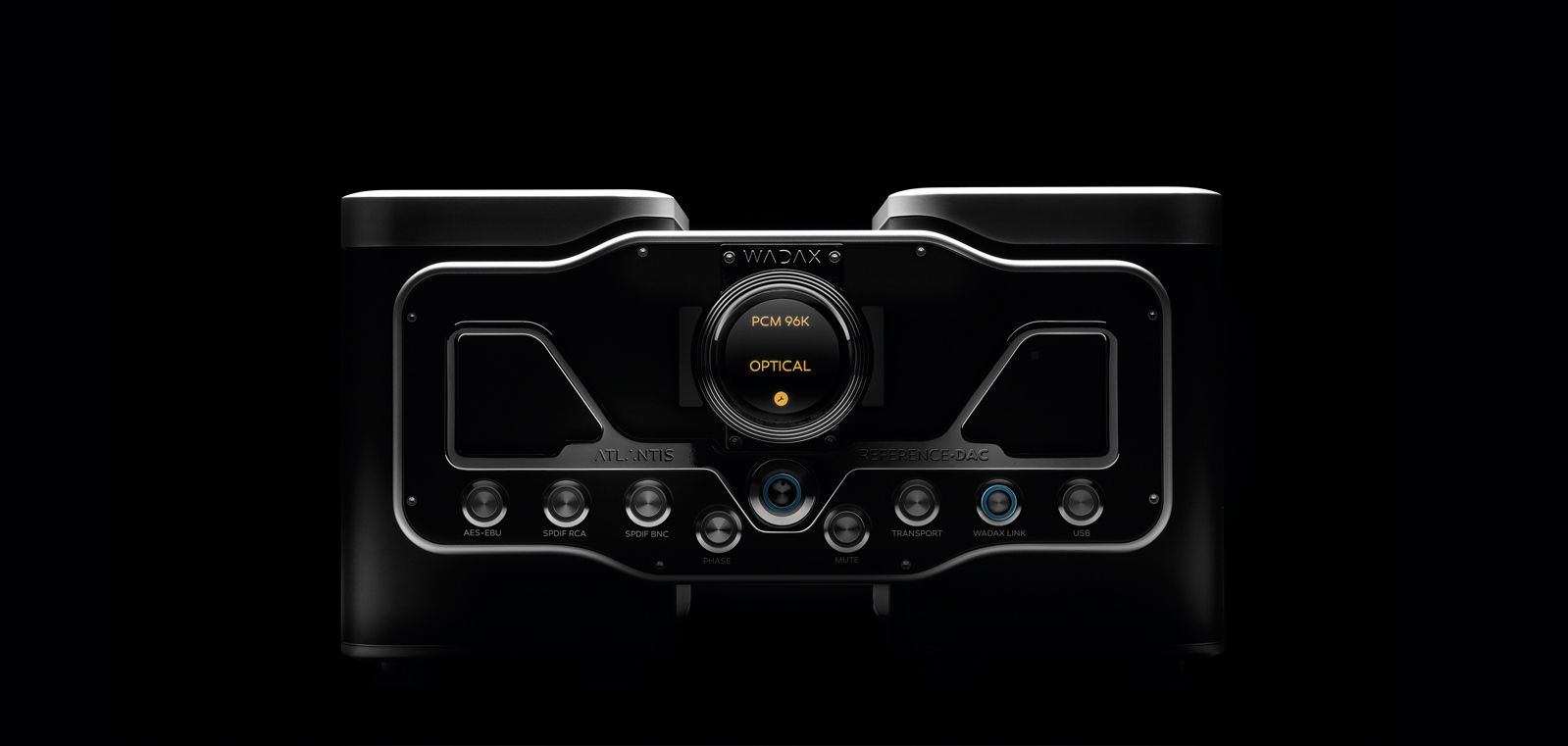
In the world of audiophiles, there exist peaks as formidable to reach as Everest’s summit. In the realm of DACs (digital-to-analog converters), the battle for that pinnacle has long been dominated by giants such as MSB Technology from the United States, dCS from the United Kingdom, and CH Precision from Switzerland. These companies have pursued the cold precision of digital with weapons like “ultimate measurement accuracy” and “breakthrough S/N ratios”—the zenith of a scientific approach akin to observing sound particles through a microscope.
However, Wadax, emerging from Madrid on the Iberian Peninsula, is attempting to redraw this competitive landscape with an entirely different approach. Their goal was never to compete in the numerical spec race. Instead, they aimed for “the complete elimination of the unease inherent in digital reproduction.” It’s an endeavor similar to leaping across the “uncanny valley” in robotics—a quest to eradicate from its foundational computational processes that “digital sound” which no amount of refinement could dispel.
The Atlantis Reference DAC featured in this review is not merely a luxury audio component. It represents an “answer” and a form of “rebellion” against digital audio—the culmination of decades of work and an enormous R&D budget by CEO and chief designer Javier Guadalajara. Does this massive metal block, carrying a price tag that could buy a house in many regions, truly contain “magic” worthy of such expense? Or is it merely an objet d’art for the wealthy?
This review will dissect the Wadax Atlantis Reference DAC in its entirety through technical background, measurement data, and exhaustive comparative listening. In the process, we will confront the fundamental question: “What constitutes good sound?”
Wadax Atlantis Reference DAC — Overview
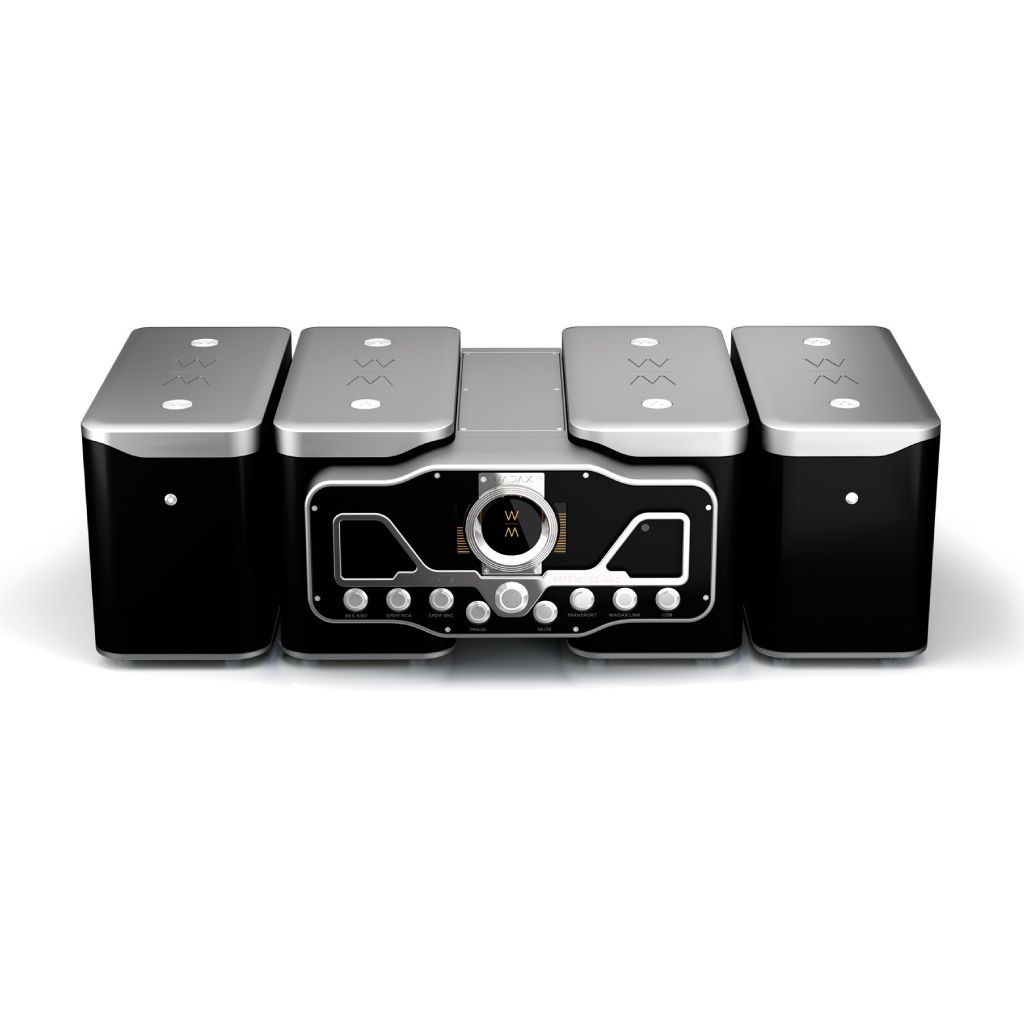
The Wadax Atlantis Reference DAC commands such presence that even calling it a “component” feels inadequate. Comprising three massive chassis (the DAC unit itself and separate left/right power supply units), its imposing form instantly transforms the atmosphere of any listening room.
- Basic Information:
- Manufacturer: Wadax (Spain)
- Product Name: Atlantis Reference DAC
- Release Date: 2019– (firmware and module updates ongoing)
- Reference Price: US $145,000–$166,420, full system exceeds $200k 1
- Key Specifications:
- Architecture: Dual-Differential musIC 3 Chip (ASIC) with Feed-Forward Error Correction 4
- Output Level: 1V / 2V / 4V (User adjustable via touch screen) 5
- Output Impedance: 0.4Ω – 600Ω (Variable, user selectable to match preamp input impedance) 5
- Inputs: USB (32-384kHz, DSD64-256, MQA), 2x SPDIF RCA, 2x SPDIF BNC, 2x AES-EBU, Native Wadax Link (RJ45), Optional Akasa Optical Link 5
- Noise Floor: 0.5 microvolts (1Hz-100kHz) — Astonishing silence approaching measurement limits 4
- Processing: 128-bit internal resolution via proprietary “musIC” chip 4
- Throughput: 12.8 GBytes/s data transfer rate needed for real-time correction 4
- Clock: Zepto Reference clock (12fs total jitter) 4
- Weight: DAC unit alone 45kg (100lbs) + total weight varies by power supply configuration (reportedly exceeding 160kg/350lbs in maximum configuration) 7
- Size: DAC Head Unit - 48cm (W) x 43.5cm (D) x 11.5cm (H) (reference values) 9
Why is it so massive and so expensive? The answer lies in Wadax’s proprietary approach called “feed-forward error correction.” They counteract the non-linear distortion inherent in existing DAC chips through real-time computation—easy to describe in words, but to realize it, Wadax developed their own ASIC (Application-Specific Integrated Circuit) and brought supercomputer-level processing power to the audio rack.
Founder Javier Guadalajara originally researched digital-domain correction of analog circuit and phono stage non-linearities. His early paper “Why Wadax,” published around 2010, described using this ASIC technology to correct phono cartridge and speaker crossover distortion 10. The Atlantis Reference DAC represents the ultimate application of this technology—now applied to “correcting the DAC chip’s own operation.” This isn’t simply about improving S/N ratios or clock precision. It’s an ambitious attempt to rewrite the fundamental “methodology” of digital playback.
1. Reviewer Voices
The appearance of this DAC has been met with shock across media outlets and forums dealing in “Ultra High-End” worldwide. However, evaluations haven’t been mere praise alone. A swirl of pros and cons surrounds the price, size, and distinctive sonic signature—a phenomenon that simply doesn’t occur with ordinary products.
| Media | Quote Excerpt | Rating (★1-5) |
|---|---|---|
| The Absolute Sound (Robert Harley) | “The Wadax Reference DAC is not only the best-sounding DAC I’ve heard, it’s the best sounding by a significant margin… The Reference DAC seemed to strip away the ever-present patina of hardness, glare, and edge that imparts an artificial quality to digitally reproduced music.” | ★★★★★ |
| The Audio Beat (Roy Gregory) | “If the goal of high-end audio is to re-create a facsimile of the original performance, then the Wadax Reference DAC has advanced the state of that art significantly … nothing else that I’ve heard is even in the same race.” | ★★★★★ |
| AudioShark User (Mike Lavigne) | “A new level compared to previous digital equipment, surpassing any digital I’ve had before in my system… Listening to better recordings on the Wadax, whatever digital format, you could easily assume you are listening to vinyl. The MSB was not like that.” | ★★★★★ |
| dCS Community User | ”First the sound…Nothing special, good, but nothing exceptional. Now, let’s talk about the only exceptional thing I noticed with this DAC: how ugly it looks like!!” | ★★☆☆☆ |
| Audio Science Review User | ”It would be better as a boat anchor… How much better realistically would this DAC be than say an RME DAC or Benchmark DAC3 with superior measurements?” | ★☆☆☆☆ |
The consensus is clearly polarized, yet reveals an interesting asymmetry. From actual owners and those who conducted direct comparison listening in their home systems (including super-flagship units like MSB Select II and dCS Vivaldi), enthusiastic evaluations pour forth claiming “digital artifacts have completely vanished” and “indistinguishable from analog (especially tape and the finest vinyl playback)” 12. Notably, “analog-first” audiophiles who have primarily focused on analog playback tend to be most impressed by Wadax’s sound.
On the other hand, critical opinions largely concentrate on the price ($160k+), chassis design, and enormous physical size 7. From measurement-focused communities (like ASR), strong voices question the product’s very existence, citing insufficient evidence of objective performance improvement relative to price 18. The minority of users with negative sonic impressions perceive Wadax’s dense, organic sound as “contrived” or “excessive coloration,” preferring the “analytical accuracy” and “cold transparency” of something like dCS. However, the fact that many actual adopters have sold their existing high-end DACs to switch to Wadax suggests a paradigm shift beyond mere “flavoring” differences 16.
2. Technical Features
What decisively distinguishes Wadax from other companies is neither using off-the-shelf DAC chips as-is nor building resistor ladders (R2R), but rather implementing “proprietary error-correction algorithms” at the hardware level. They are confronting the “inconvenient truth” of digital playback head-on.
Architecture: musIC Chip & Feed-Forward Error Correction
At Wadax’s core lies the proprietary ASIC (Application-Specific Integrated Circuit) called “musIC 3” 4. While a Texas Instruments (TI) delta-sigma DAC chip handles the D/A conversion core, most functions are replaced by proprietary circuits and the “musIC 3” chip 27.
- Feed-Forward Error Correction:
This is the seed of Wadax’s magic. The “feedback (NFB)” typically used in DACs and amplifiers compares output signals with input signals to correct errors, but this inherently introduces time delays, degrading phase characteristics and adversely affecting transient response. Wadax’s approach is “feed-forward.”
They exhaustively map how the DAC circuit generates non-linear distortion in response to load (input signal amplitude and frequency)—called “Adaptive Delta Hilbert Mapping.” The instant a music signal is input, the system instantaneously calculates “what errors will occur” as that signal passes through the DAC chip, then adds an inverse-phase signal to cancel those errors to the original signal before feeding it to the DAC 5.
- Theoretical Effect: This cancels the DAC chip’s inherent quirks and distortion (transfer function non-linearity) in real-time, approaching the theoretical ideal conversion. The result: time-domain smearing vanishes, phase aligns, and attack/decay become natural.
- Computational Power: This processing requires enormous computational capability, with data transfer rates reaching 12.8 GBytes/s and internal processing at 128-bit 4. This far exceeds the realm of typical PC audio.
- ASIC vs FPGA: Competing companies (dCS, MSB, Chord, Playback Designs, etc.) often use FPGAs (Field Programmable Gate Arrays) for algorithm implementation. FPGAs offer development flexibility since programs can be rewritten. However, Wadax deliberately chose ASICs (chips with fixed circuits). While ASICs involve enormous design costs (hundreds of millions of yen) and carry the risk of being unchangeable once made, for specific processing they are overwhelmingly faster than FPGAs, more power-efficient, and can minimize processing latency 21. This “speed” was essential for feed-forward correction where time-domain precision is the lifeline. Wadax spent over 10 years developing this chip.
Engineering: The Physical Reality
The engineering to translate technical ideals into physical reality is equally extreme.
- Power Supply: Separate from the DAC unit, massive independent power supply units exist for left and right channels. These feature 10 custom-wound transformers and over 30 stages of local regulation to supply extremely clean DC to the “Zepto Reference Clock” and DAC circuits 4. Noise level achieves 0.5µV (1Hz-100kHz)—silence approaching measurement limits. Considering typical high-end power supplies measure several to tens of µV, the abnormality of this figure becomes apparent.
- Modular Construction (Card Cage): A card cage structure comprising 23 independent circuit boards allows board-level replacement and upgrades to accommodate future technological advances 4.
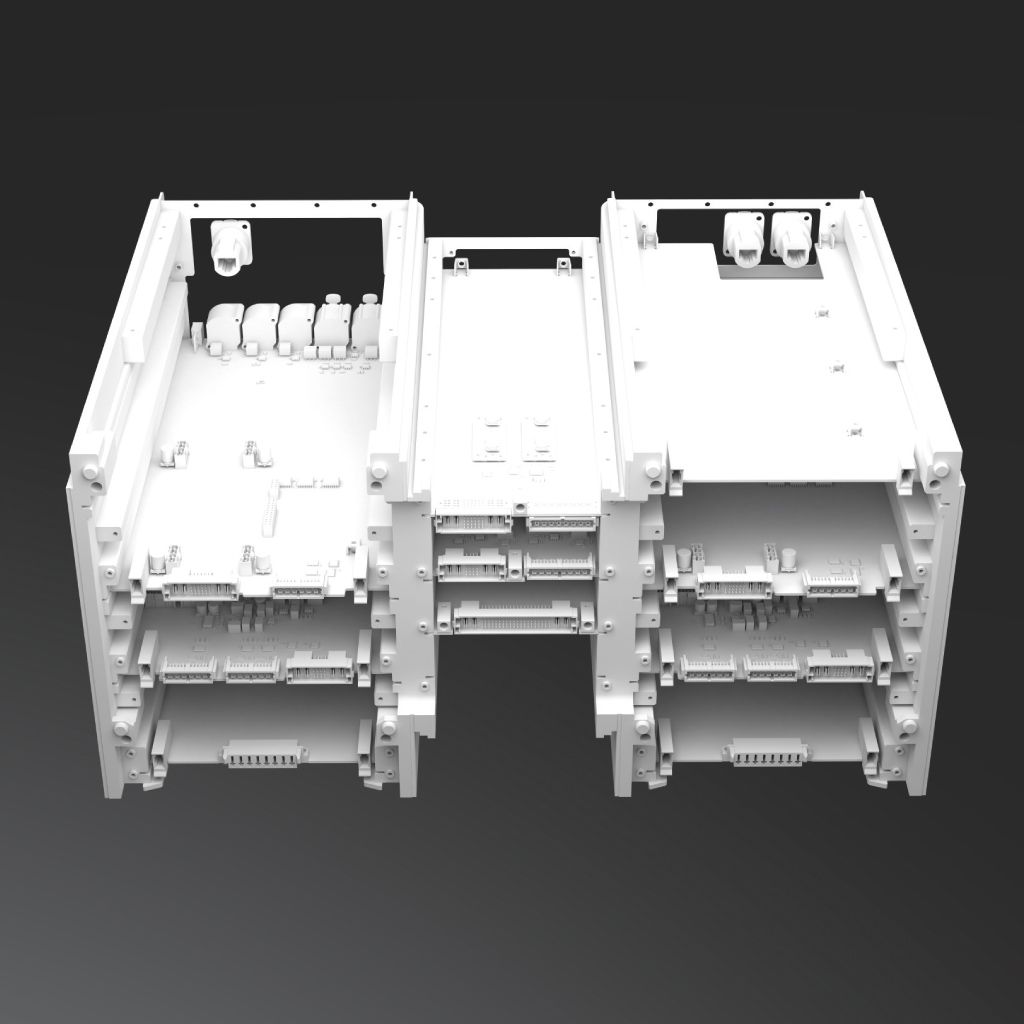
The chassis itself is massive partly to physically isolate each circuit block and prevent mutual interference (crosstalk and EMI).
- Variable Output Impedance: A highly unique feature allows users to set output impedance (0.4Ω–600Ω) 5. This enables perfect electrical matching with connected preamps or power amplifiers. Impedance mismatch causes frequency response undulation and dynamics loss, but Wadax lets users control this “variable” to guarantee design-intent performance with any system.
Spec Comparison: The Titans of Digital
| Feature | Wadax Atlantis Reference | MSB Select II | dCS Vivaldi Apex | CH Precision C1.2 |
|---|---|---|---|---|
| DAC Type | TI Delta-Sigma DAC Chip + Proprietary ASIC | Hybrid DAC (Discrete R2R Ladder) | Ring DAC (5-bit) | R2R Ladder (PCM1704 x4/ch) |
| Clock | Zepto Reference (12fs jitter) | Femto 33 Clock | dCS Master Clock (external recommended) | T1 Clock (external recommended) |
| Configuration | 3 chassis (DAC + PSU L/R) | Up to 4 chassis (DAC+PSU+Clock+DD) | 3-4 chassis (DAC+Clock+Upsampler) | Modular (external PSU optional) |
| Correction Technology | Time-Domain Feed-Forward | High-Precision Resistor Ladder | Mapper Algorithm (FPGA) | Polynomial Filtering (PEtER) |
| Price Range (USD) | ~$166,000 (DAC+PSU) | ~$140,000 (with options) | ~$46,500 (DAC only) | ~$40,000 (Base) + Options |
| Sound Character | Organic, dense, overwhelming presence | Ultra-high resolution, natural, silence | Analytical, vast soundstage, precise | Neutral, high-speed, dynamic |
3. Objective Analysis Based on Measurement Data
Wadax is one of those brands that doesn’t actively publish detailed measurement data (such as THD+N vs. frequency graphs from APx555) publicly 18. While this draws criticism from “measurement supremacist (ASR-style)” users, certain behaviors can be inferred from the maker’s claimed specs.
- Meaning of 0.5µV Noise Floor (1Hz-100kHz): This figure is astonishing. Typical high-end DACs have residual noise at several µV levels; 0.5µV approaches measurement instrument limits. This suggests “expressive power in the blacks.” Micro-signals don’t get buried in the noise floor, and the decay—those moments as sound fades—should manifest as overwhelming silence in perceived S/N ratio. Fine ambience information emerges unmasked by noise, creating depth in the soundstage.
- Jitter at 12fs (femtoseconds): Wadax’s 12fs is significantly lower than MSB’s Femto 33 Clock spec-wise 4. Jitter reduction directly connects to eliminating high-frequency harshness (digitalitis) and improving image focus. Wadax’s sound being described as “smooth” and “analog-like” may be because this extremely low jitter eliminates unpleasant time-domain artifacts.
- Impedance Matching Correlation: The variable output impedance function is extremely effective for maintaining frequency response flatness in electrical measurements. Cable capacitance and receiving-end impedance can cause high-frequency rolloff or bass bloating, but Wadax keeps this physical phenomenon under control 24. This resolves the vague problem of “system compatibility” through electrical engineering.
4. Listening Impressions
Synthesizing voices from owners and reviewers worldwide, a common “narrative” emerges about the Wadax Atlantis Reference DAC’s sound: “The collapse of the resolution-versus-musicality conflict.” While many DACs “present information,” Wadax “recreates events.”
| Reviewer / Media | Quote Excerpt |
|---|---|
| Robert Harley (TAS) | “The spatial performance took on an entirely different realm… The wall behind the speakers vanishes, replaced by a tremendous sense of distance… Bass was instantly clarified from ‘mush’ into individual notes, with pitch resolution and dynamic articulation revealed.” |
| Mike Lavigne (WBF) | “The Wadax combo… performers come alive, space around the music becomes clearer, action and nuance reach the same level as vinyl… In direct comparison with good vinyl, it was a draw!“ |
| 2fastdriving (Audio Shark Forum) | “MSB has excellent resolution but sounds slightly flat in comparison. Wadax has an analog-like grain-free fluidity while maintaining fine texture.” |
Detailed Description:
- Bass: Wadax’s bass isn’t simply “heavy” or “deep.” What’s remarkable is “pitch accuracy and separation.” While many DACs render bass as a mass of energy, Wadax clearly delineates the pitch of each bass note, the elasticity of plucked strings, and the body resonance texture. This becomes especially pronounced when paired with the Atlantis Reference Server—bass is redefined not merely as foundation but as a “rhythmic instrument.” The grip on woofers is extraordinary; even room-shaking sub-bass never becomes boomy, with sculptural outline definition.
- Mids: This is Wadax’s true forte—the domain described as “Magic.” The “density” and “body” of vocals and acoustic instruments is overwhelming. Where dCS draws razor-sharp outlines, Wadax renders the “core” of sound with natural harmonic gradation around it. This makes voices viscerally immediate with palpable warmth—not the warmth of tubes, but an “organic smoothness” born of excessive information. A singer’s mouth movements, breath, chest resonance—all emerge holographically.
- Treble: Complete absence of “digitalitis (digital glare).” Cymbals and brass have intense energy yet absolutely no ear-piercing edge. Despite extending into ultra-high frequencies, the texture is liquid, fading into the air as it decays. The sensation is that 12fs clock precision and feed-forward correction have eliminated high-frequency grain at the atomic level.
- Soundstage & Imaging: What’s remarkable is “depth” and “three-dimensional presence.” Beyond left-right spread, the projection behind the speakers is tremendous. Orchestral instrument groups aren’t arranged on a plane but positioned with front-back distance relationships. Images emerge not as “points” but as “three-dimensional objects” with tangible presence, surrounded by dense atmosphere. Walls disappear; it’s as if the concert hall space itself materializes in the listening room. This spatial reproduction enters another dimension entirely when connected to the Reference Server via Akasa optical link. Citation: 13
5. Evaluation
| Category | Score (out of 5.0) | Detailed Explanation |
|---|---|---|
| Technical Performance | 5.0 | Feed-forward correction via proprietary musIC chip, 0.5µV noise floor, 12fs jitter. These aren’t mere catalog spec decorations—they directly translate to audible silence and presence. The dedication and technical prowess to develop an ASIC from scratch in an FPGA-dominant era deserves a perfect score. |
| Musical Appeal | 5.0+ | Transcending the binary opposition of “analytical” vs. “musical,” the ability to reconstruct recorded information as “performance” is outstanding. The power to immerse listeners in musical joy rather than making them analysts is rare even at this price point. |
| Build Quality | 4.5 | Chassis rigidity, internal isolation structure, and parts selection approach perfection. Mass exceeding 100kg is a badge of trust, yet also an installation nightmare. The avant-garde design divides opinion, and the massive footprint could warrant deduction (though perhaps trivial in high-end). |
| Value (Price/Performance) | 2.0 | Objectively, a DAC alone exceeding $160k and full systems approaching $500k is insanity. Performance is supreme, but this transcends “value” discussion. It’s a “named buyer” product for the wealthy; discussing cost performance is itself nonsensical. |
| Future-Proofing/Serviceability | 4.5 | The modular structure guaranteeing upgrade paths deserves high marks. Wadax Cloud remote support is modern. However, risk accompanies a small manufacturer. |
Bias Check: Pros: Overwhelming organic sound, complete absence of digital artifacts, technical uniqueness, modular design with upgrade path. Cons: Astronomical price, size and weight requiring careful placement, heat generation, divisive design, non-disclosure of measurement data (APx reports, etc.).
6. Macro-Perspective Analysis
Market Position
The Wadax Atlantis Reference DAC is one of the few products competing for the “summit” of the high-end audio pyramid. As of 2025, competitors in this realm narrow to these three:
- MSB Select II DAC: Long-reigning “absolute champion.” Its sound is ultimate “naturalness” and “transparency.” Compared to Wadax, MSB is more “water-like”—colorless and transparent—while Wadax has “wine-like” richness and dense presence. MSB’s R2R ladder DAC excels in micro-signal linearity, but many evaluations suggest Wadax’s feed-forward correction surpasses MSB in “thickness” and “drive” 15.
- dCS Vivaldi Apex: The zenith of digital processing. Its FPGA-based Ring DAC creates “scientific” and “precise” sound contrasting Wadax. dCS has an objectivity to survey the soundstage (god’s-eye view), while Wadax offers subjective immersion as if feeling performers’ sweat (front-row experience). For those describing dCS sound as “cool” or “mentholated,” Wadax’s heat represents the opposite salvation 26.
- CH Precision C1.2: Swiss precision machinery. Excels in speed, dynamics, and S/N ratio, but lies in a different vector from Wadax’s “humidity” and “color density.” CH achieves full potential when an entire system uses their products, but Wadax has the power to transform an entire system’s “dominance” as a single component.
Related Articles

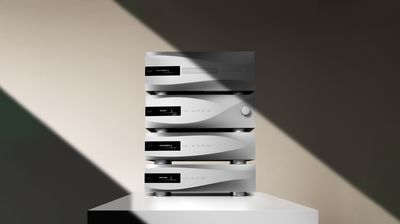
dCS Vivaldi Review: The 'Absolute Monarchy' of Digital Playback — At the Boundary of Precision and Musicality
The $100,000+ dCS Vivaldi system, launched in 2012, represented the pinnacle of digital playback. This in-depth analysis examines the 4-box system's true capabilities—caught between 'academic precision' delivered by Ring DAC technology and 'musical appeal'—through contemporary reviews, measurement data, competitor comparisons, and generational perspectives.

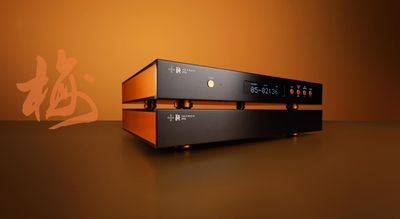
Holo Audio MAY DAC Review: The R2R Breakthrough That Reconciles Measurements and Musicality
Despite being a resistor-ladder (R2R) DAC, the Holo Audio MAY achieves measurement performance surpassing delta-sigma designs while maintaining organic musicality. This flagship DAC ends the cold war between objectivists and subjectivists.


dCS Varèse Music System Review: Organized Sound
A comprehensive review of the dCS Varèse Music System: establishing a new benchmark in digital playback

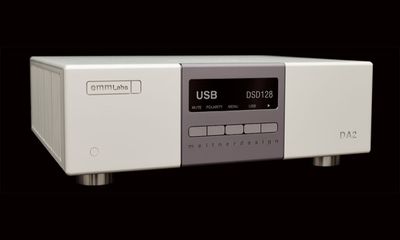
EMM Labs DA2 V2 Review: Metaphysics of Digital Reproduction
EMM Labs' flagship DAC from Canada. The culmination of DSD purism pursued by Ed Meitner, co-developer of SACD/DSD format. This $30,000 monumental converter achieves organic sound free from digital artifacts through 16xDSD proprietary discrete converter and thorough jitter elimination.
Target Audience
The target for this product is clear: the wealthy without budget constraints who wish to obtain “the sound of the finest analog vinyl (like TechDAS Air Force One)” with digital convenience. They pay tens of thousands for the experience of “Miles Davis being resurrected in their living room” rather than spec sheet numbers. Additionally, for high-end gypsies already owning MSB or dCS who sense “something missing (lack of soul)” in their sound, Wadax may represent the final resting place.
7. Conclusion & Recommended Users
The Wadax Atlantis Reference DAC is a singularity in digital audio history. By pushing digital signal processing technology to its limits, it has paradoxically arrived at “the most analog-like sound.” The musIC chip’s error correction was the key to unlocking the curse of “unnaturalness” haunting digital playback.
If you seek “analysis” from audio, dCS or MSB might bring more happiness. But if what you seek is an “experience” touching performers’ souls, and you’re prepared to invest a house’s worth for it, Wadax becomes the one and only choice. It’s not a machine reproducing recorded music—it’s a time machine recreating the air from the moment music was born.
- Who Should Consider Purchasing:
- Unlimited budget, seeking dense and present digital playback rivaling or exceeding the finest analog systems.
- Finding existing high-end DACs (MSB, dCS) “beautiful but unsatisfying” or “too analytical.”
- Having rack load capacity (100kg+) and installation space, able to appreciate massive chassis.
- Who Should Not Consider Purchasing:
- Prioritizing cost performance.
- Preferring analytical/monitor-flat sound or “tasteless” neutrality.
- Not wanting massive, eccentric-design equipment in the living space.
- Requiring scientific measurement data (SINAD, etc.) as absolute purchase criteria.
Verdict:
“An organic life form in digital disguise. A crystal of madness and passion that reproduces music’s ‘vitality’ rather than its ‘resolution.’”
Overall Rating: ★★★★★
References
- Wadax Impresses and Satisfies in Munich - Stereophile.com, https://www.stereophile.com/content/wadax-impresses-and-satisfies-munich
- Wadax Atlantis Reference (DAC) (DAC): Reviews, Competitors, Used Pricing - ExtremeHiFi, https://www.extremehifi.com/product/wadax-atlantis-reference-dac-83bY
- AXISS Audio: High-End Audio, https://axissaudio.com/
- WADAX Reference DAC - Goodwin’s High End, https://www.goodwinshighend.com/wadax-components/wadax-reference-dac/
- Atlantis Reference [DAC] - wadax, https://wadax.eu/reference/
- Studio Collection | Player System - Wadax, https://landing.wadax.eu/studio-player/
- New Wadax upgrades take price to $376,520 - Audio Systems - dCS Community, https://dcs.community/t/new-wadax-upgrades-take-price-to-376-520/6241
- Wadax Atlantis Reference Digital-to-Analog Converter - The Audio Beat, https://www.theaudiobeat.com/equipment/wadax_atlantis_reference.htm
- Wadax – American Sound of Canada Distribution, https://audiopathways.com/wadax/
- What SPECIFICALLY is better or different about the Wadax Design? How do these design choices manifest in better sound? | What’s Best Audio and Video Forum. The Best High End Audiophile Forum on the planet! For audio advice, product reviews and more., https://www.whatsbestforum.com/threads/what-specifically-is-better-or-different-about-the-wadax-design-how-do-these-design-choices-manifest-in-better-sound.35197/post-811654
- Atlantis Reference DAC takes The Absolute Sound by storm! - wadax |, https://wadax.eu/?q=news/atlantis-reference-dac-takes-absolute-sound-storm-0
- Wadax Atlantis Reference - Lotus Hifi, https://www.lotushifi.co.uk/the-wadax-atlantis-reference/
- Wadax Atlantis Reference Music Server - The Absolute Sound, https://www.theabsolutesound.com/articles/wadax-atlantis-reference-music-server/
- New Wadax Atlantis Reference Dac - What’s Best Forum, https://www.whatsbestforum.com/threads/new-wadax-atlantis-reference-dac.27860/page-11
- Wadax Reference Dac and Server arrive - What’s Best Forum, https://www.whatsbestforum.com/threads/wadax-reference-dac-and-server-arrive.34173/page-25
- Wadax Reference Dac and Reference Server arrive | AudioShark Forums, https://www.audioshark.org/threads/wadax-reference-dac-and-reference-server-arrive.20662/
- Wadax vs Vivaldi - dCS Community, https://dcs.community/t/wadax-vs-vivaldi/6081
- WADAX REFERENCE DAC-$160K - Audio Science Review (ASR) Forum, https://www.audiosciencereview.com/forum/index.php?threads/wadax-reference-dac-160k.48757/
- MSB Cascade compared to Wadax Studio - What’s Best Forum, https://www.whatsbestforum.com/threads/msb-cascade-compared-to-wadax-studio.41181/page-5
- WADAX - Benelux Distributor - Reference Sounds, https://www.referencesounds.nl/en/brands/wadax/
- ASIC vs. FPGA: What’s the difference? | ASIC North Inc, https://www.asicnorth.com/blog/asic-vs-fpga-difference/
- FPGA vs ASIC: Choosing the Right Solution for Your Design - Microchip USA, https://www.microchipusa.com/electrical-components/fpga-vs-asic-choosing-the-right-solution-for-your-design
- Atlantis REFERENCE DAC - Wadax - Bending Wave USA, https://www.bendingwaveusa.com/shop/wadax/reference-dac/atlantis-reference-dac/
- Wadax Atlantis (DAC) (DAC): Reviews, Competitors, Used Pricing - ExtremeHiFi, https://www.extremehifi.com/product/wadax-atlantis-dac-83vv
- Göbel + WADAX + CH Precision + A/V RoomService | Stereophile.com, https://www.stereophile.com/content/g%C3%B6bel-wadax-ch-precision-av-roomservice
- Various DAC Audition Impressions - What’s Best Forum, https://www.whatsbestforum.com/threads/various-dac-audition-impressions.35372/page-5
- Wadax Reference DAC - The Absolute Sound, https://wadax.eu/sites/default/assets/2183883.pdf